This Is NOT About Technology: The Real Door
This Is NOT About Technology: The Real Door
Yesterday, we talked about the king’s seal and how a message can look official and still be false. Today’s cybersecurity news made me think about the same idea from a different angle.
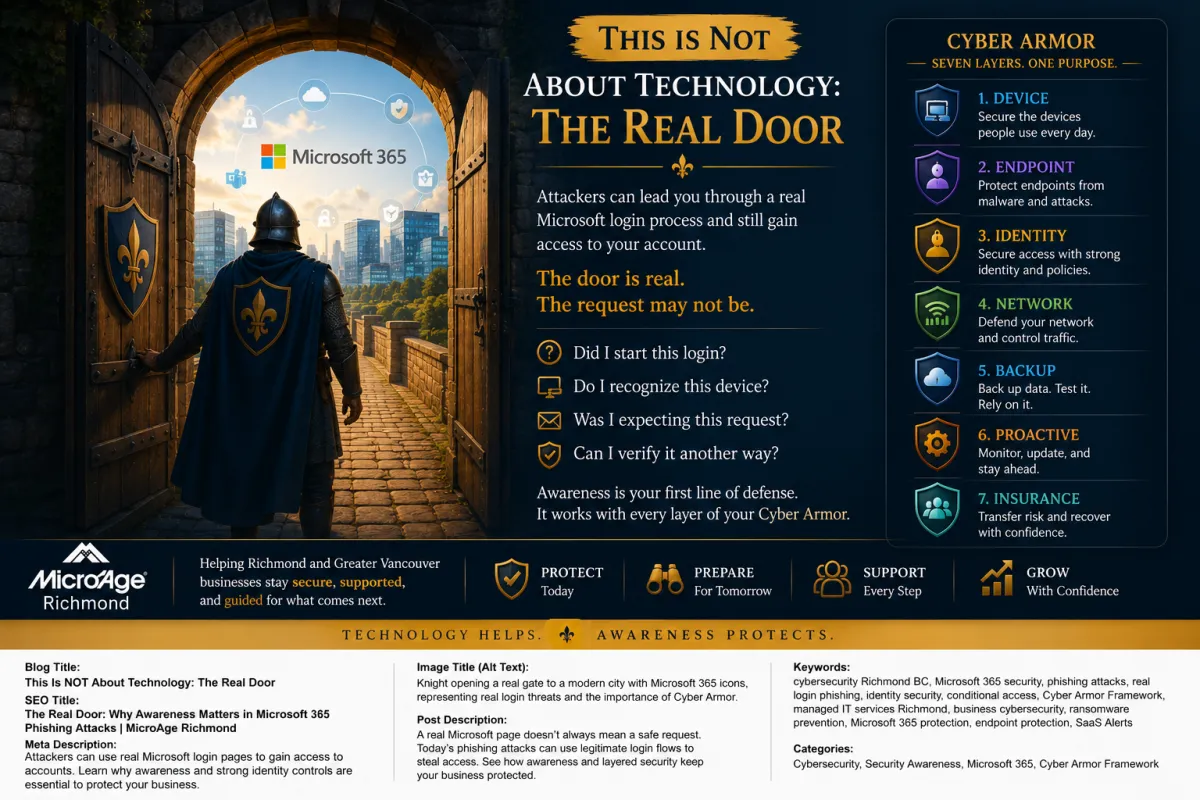
What if the door itself is real?
For centuries, guards were taught to watch for forged papers, false keys, and suspicious strangers. But imagine someone arriving at the real city gate with a key that works. The guard opens the door himself, only to discover later that the person asking to enter was never who they claimed to be.
Something similar is happening with a Microsoft 365 phishing technique in today’s news.
Instead of sending people to an obvious fake login page, attackers can lead them through a real Microsoft authentication process. The Microsoft page is legitimate. The problem is the person who asked you to go there.
I find this worth paying attention to because, for years, we have taught people to check whether a website is real. That is still good advice, but perhaps we need to add another question:
Why am I being asked to do this?
Did I start this login? Do I recognize the device? Was I expecting this request? Can I verify it another way?
Sometimes thirty seconds of curiosity can change what happens next.
This is where the Identity layer of our Cyber Armor becomes important. Strong identity controls, thoughtful Conditional Access, and monitoring unusual Microsoft 365 activity all help. But so does having a team that feels comfortable stopping when something simply does not make sense.
The technology matters. The pause matters too.
So the question I am carrying with me today is this:
If a real Microsoft page asked someone on your team to approve access, would they recognize the door—or wonder who asked them to open it?
Strong businesses are built on awareness.
Awareness gives you time. Time gives you choices.
Technology helps. Awareness protects.